Why Does America Keep Fighting Wars Around the World? The Politics, Profits, and Hidden Costs of War

Why Is America Always Fighting Somewhere?
Imagine a world where people get up every morning and don’t have to think about airstrikes or bombs or soldiers coming into their country or the noise of planes flying over. Imagine kids going to school without being scared and families trying to build their lives without the risk of losing everything in a night.
It sounds like a wish.. In many places around the world that wish is still far away.
When we look at the history of today one country keeps coming up when people talk about fighting and other countries and the safety of the world. That country is the United States of America.
America has been in wars in Korea, Vietnam, Iraq and Afghanistan. It has done actions in many other countries given weapons to other governments and has bases all over the world. American soldiers are also very important in the groups and agreements that help keep the world safe.
This leads to a big question: Why does America keep fighting in countries that are not its own?
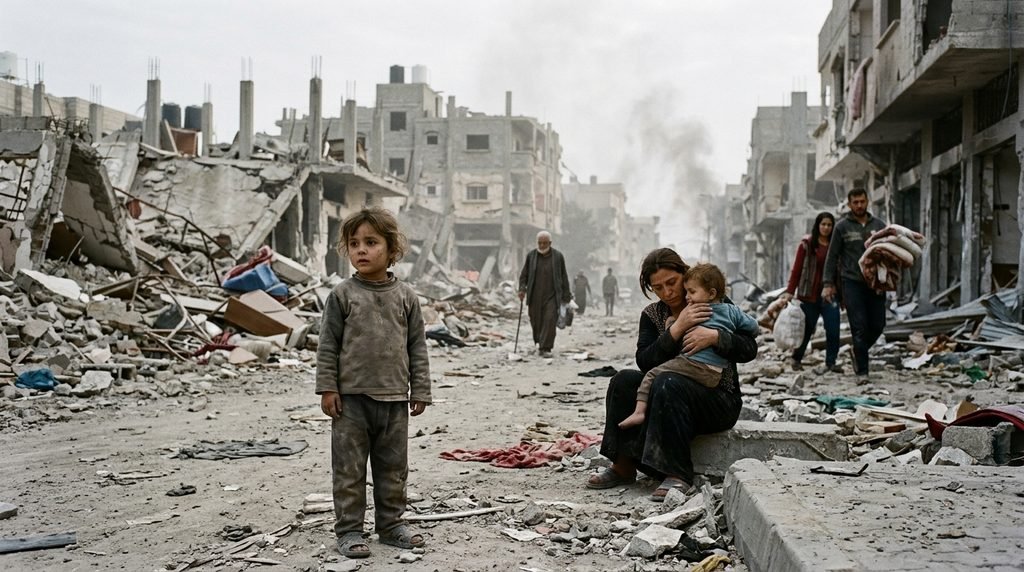
Is it to keep its people safe? Is it to protect democracy? Is it to stay in charge of the world? Does the economy get something from war?. Does the country sometimes get stuck in fights that cost more than people thought?
The real answer is not simple. American leaders have wanted things in different wars. Some fights came after attacks or real dangers. Others were to stop powerful countries protect important interests change how other countries work or make big changes, in their politics.
To figure out why America goes to war we need to look past what the presidents say. We need to see the money, the power, the politics and what happens to people when leaders decide to use the army.
Why Does America Go to War?
Let us begin with the obvious explanation. American leaders say that American leaders use force to protect national security. That argument is not always false. After the September 11 2001 attacks the United States invaded Afghanistan to target al-Qaeda and overthrow the Taliban government that had sheltered the group. The United States also has treaty commitments to allies. Maintains military capabilities to deter attacks, against the United States and its partners. However national security does not explain every military intervention.
America wants to maintain its global power
It appears that, since the end of World War II the United States has built an international position. They got this position is based on alliances, overseas bases, economic influence and a powerful navy and air force. later than the Soviet Union collapsed in 1991 America became the worlds leading power. American leaders wanted to keep that position and stop enemy countries from gaining control over areas around the world.

Today Washington keeps an eye on China, Russia, Iran, North Korea and various armed groups that pose a threat to American interests or its allies. From the viewpoint of Washington military strength helps prevent rivals from acting. A strong military also gives allies confidence that the United States will stand by them when a crisis happens.
Other countries might see the same military actions, in a different way. They could see bases, naval patrols and military agreements as efforts to take control of their region. This is where the issue starts. One countrys idea of safety can turn into another countrys sense of danger.
America wants influence over the international order
Armed forces power gives the United States influence that diplomacy alone cannot always provide.
If you think about a country that sits near shipping routes, important energy supplies or a region where rival nations are fighting for control. Events in that country can affect trade, energy prices or how strong American alliances remain.
Washington may see something happening in that country. Believe it threatens American interests. The response can come in forms—diplomacy, economic sanctions, financial help selling weapons or even military force.
War is not the choice but it is a choice that American leaders have used many times.
The invasion of Iraq in 2003 is an example. The George W. Bush administration said Iraq was a threat pointing to weapons of mass destruction. After the war investigations found no stockpiles of those weapons—no evidence that justified the war.
The invasion did remove Saddam Hussein. It also led to years of violence, chaos and deep suffering. This history brings up a question: What happens when leaders decide to go to war based on wrong assessments? The country that starts the war may survive the error. The country that gets invaded may carry the damage, for generations.
Does America fight wars for oil?
Many people think that the United States goes to war just to take oil from countries. Energy interests have had an impact on foreign policy especially in the Middle East.. Saying that every war the United States fight is for robbery oil is too simple. Oil is important because it affects markets, factories, transportation and the economies of American friends.

Governments may then see access to energy and the safety of shipping routes as goals.
On the hand the link between oil and war is not for all time clear. The United States did not take over Iraq’s oil fields after the 2003 attack. Iraq still had its oil and foreign companies worked under agreements with the Iraq’s government.
Oil can help explain some choices. It does not explain everything. Security issues, politics, beliefs, pressure from, inside the country and mistakes also play a role. We should look at each war by itself. Not think that one reason explains all of them.
What Does America Gain From War?
At first glance, war looks like a terrible business. Governments spend billions of dollars, soldiers risk their lives, and entire cities can be destroyed. So why does a wealthy country continue to invest so heavily in military power? Part of the answer lies in the difference between the interests of a government, the interests of private companies, and the interests of ordinary citizens.
The government gains strategic advantages
I think when the United States deploys troops or sets up bases overseas the United States can act fast when crises arise. The United States can collect information, back allies, guard sea lanes. Show United States’s power. Military moves can also help a government weaken a rival or shape another nation’s politics.
I see these advantages as boosting America’s standing in talks. I notice other governments listen closely to American warnings when they think Washington can and will use force.
I also know that strategic advantages do not always lead to good results. A country can win battles. Still lose political clout. A country can topple a regime without making a new one.
Afghanistan showed this problem sharply. After twenty years of American‑led war the Taliban came back, to power in August 2021.
The United States spent resources yet the United States failed to reach its main long‑term aim of creating a government that could survive without more United States help.
Defense companies make money
Let us also look at the side of this story. A modern military force uses combat aircraft, missiles, drones, radar systems, warships, ammunition, armored vehicles, communication equipment and satellite systems. In addition there is a need, for maintenance, software, fuel, transport systems and logistical support. Often these needs are fulfilled by entities or companies.

When the government increases spending defense contractors can get orders. When a war uses up ammunition or breaks equipment the military might need supplies. When leaders see dangers they might buy advanced weapons. Companies that make these things can make money.
A study from Brown University’s Costs of War project looks at how military spending helps defense contractors. It also shows how lobbying and political power can keep spending high.
This creates a difference: a war might make money for some companies even if it hurts the country overall. A weapons maker might see sales go up while regular people pay more in taxes. A contractor might grow its business while families in war areas lose their homes. These things can happen at the time.
We should not think that every defense deal is corrupt or that every military company wants war. Governments buy weapons for safety to stop enemies and to be ready. They also buy them for fighting. The problem comes when private money starts to shape choices, about war and peace too much.
Military spending creates jobs
Defense spending also creates jobs in factories, engineering firms, research laboratories, transport companies and military communities. A fighter jet requires engineers, technicians, software developers, metalworkers and many other specialists. One large military contract can create thousands of jobs across states. Politicians often defend budgets because their voters benefit from these jobs.. There is a problem. Money spent on weapons cannot be spent on the scale on hospitals, schools, public transport, housing or clean energy. Defense spending can create jobs. Civilian investment can also create jobs and improve people’s lives. The real question is not whether Defense spending produces activity. It clearly does. The real question is whether the country gets the possible public benefit, from the money it spends.
Who Pays for America’s Wars?
Here is a question that deserves more attention: Where does the money actually come from?
When American forces enter a war, the government does not usually collect a separate war payment from every citizen. It uses the federal budget, which draws money from several sources.
I think that taxes give us the money. The United States government collects income taxes, payroll taxes, corporate taxes and other forms of revenue. Congress authorizes spending, including the defense budget and additional funding, for military operations when necessary. The government then uses that money to pay soldiers, purchase equipment maintain bases, transport supplies and support operations. American taxpayers therefore carry a part of the financial burden even when American taxpayers never see a battlefield.
The government borrows money
Taxes always do not cover all spending. When government spends more than it collects government runs a budget deficit. Government can finance that deficit by borrowing through sale of US Treasury securities. This means government can finance operations today and leave part of the burden for future taxpayers. Borrowing does not make war free. Borrowing changes when government pays and how much government may eventually owe.
Government must service debt. Government must pay interest. When borrowing continues over years interest costs can become a part of long‑term financial burden. Research from Brown University Costs of War project emphasizes that true cost of war extends beyond battlefield operations. Research includes veterans care, disability benefits, interest, on war‑related borrowing and other obligations that continue long after troops leave battlefield.
A large defense budget does not mean every dollar pays for war
We should also make a distinction. America spends a lot on its military even when it is not involved in a war. That money pays for people who serve their training keeping things in shape looking for new ideas buying tools having places to stay and making sure others do not try to attack.
The Department of Defense asked for about $849.8 billion for its budget in the year 2025. That number included different military activities, not just the money needed for real fighting. More money could be given for problems or duties. This difference is important because people often think the whole military budget is for war. It is not.. Being ready for action sending people to other countries making new weapons and being, in real fights are all parts of Americas bigger plan to stay safe.
Does America Actually Profit From War?
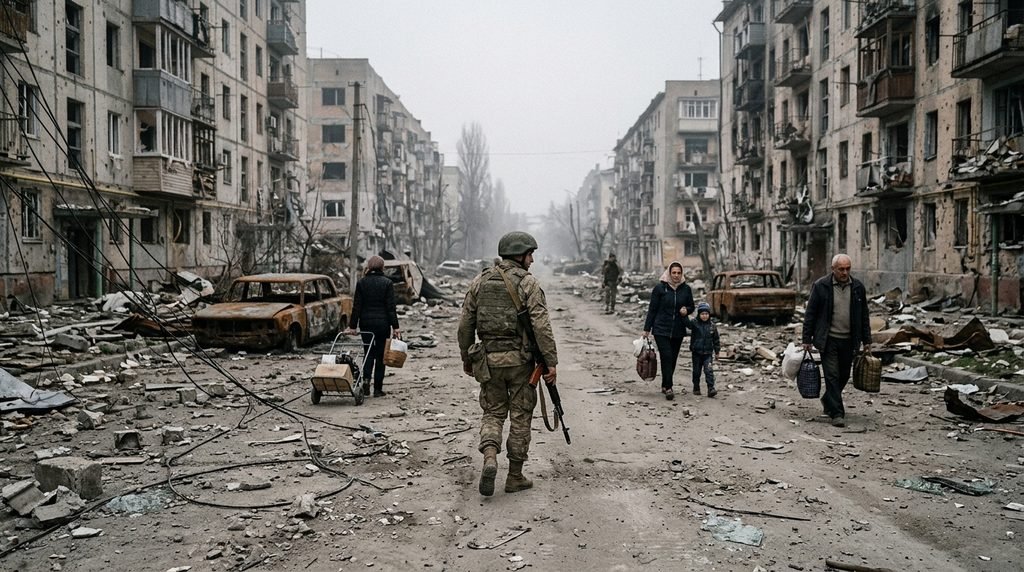
The answer depends on what we mean by profit.
If we look at the income of a weapons manufacturer the answer may be yes. A company that receives a government contract can increase its revenue and employ more workers.
If we look at the position of the American government a military operation may also produce benefits. It might weaken a group protect an ally or discourage a rival from attacking.
If we examine the entire American economy the picture becomes much less straightforward. Every War destroys resources. It consumes fuel, missiles, equipment and also human labor. It can disrupt trade increase uncertainty and require years of spending on veterans and reconstruction. A government may also achieve its objective without achieving its political objective.
The Iraq War illustrates this problem. A study conducted by Neta Crawford under the Brown universtity in 2023 says that cost of War project estimated that the economical cost of Ameriacn war in Iraq and Syria from 2003 to 2023 would exceed $2.89 trillion. It includes veterans care through 2050 was included.
That estimate covers a set of wars and long-term obligations. It should not be mistaken for the cost of every war or every US military operation. Still it shows how far the financial consequences can extend beyond the moment when fighting stops.
America may gain experience support some industries and achieve certain strategic goals.. Those gains do not prove that the country has earned more than it has spent.
A profitable contract is not the same, as a war.
What Are the Economic Costs of War for America?

The national debt keeps growing. When the government borrows money to pay for operations the national debt gets higher. The government must later handle those obligations. It can do this by raising revenue changing spending or refinancing. Interest payments on the debt compete with every other demand on the federal budget. The weight of the debt can stay on the government for many years even after the war is over.
Veterans need long‑term help. Soldiers who come back from war they have injuries, disabilities or mental wounds. Some of them need care and rehabilitation for the rest of their lives. Their families might lose income. Spend long years giving care. A fair estimate of the cost of war must include all of these consequences. The cost of an operation does not finish when the government stops buying ammunition.
Other public services face trade‑offs. Government has narrow resources even if it can make use of money. When the government spends a lot on military policymakers they think how to fund education, health care, roads, disaster readiness and other public needs. Heavy defense spending does not automatically fix all problems in these areas. Taxes, choices, economic conditions and other spending decisions also matter. Still military spending creates an opportunity cost. Money used for one purpose cannot be used for another at the time.
What the United States could build with a small share of the resources that go to long wars. It could repair bridges grow research improve schools support science or boost disaster response. Some of those investments might also give long‑term returns. This does not mean America should drop its defenses. It means its leaders must explain why some military spending is more important, than public needs.
Why Does the American Government Keep Spending on Weapons?
To understand this question we must examine how politics, industry and national security are linked.
Defense companies rely heavily on contracts from the government. Some factories and research centers are located in districts where spending on defense keeps jobs alive.
Politicians have reasons to protect those jobs. Workers want jobs that’re steady communities want investment and companies want contracts.
Defense contractors can also lobby officials and lawmakers. They can say that new weapons are needed to fight threats keep technology ahead or guard national security.
Some of these arguments are true. The United States faces security threats and modern defense needs research, trained people and dependable equipment.
This connection creates a danger.
When spending on defense supports businesses, jobs, political groups and powerful institutions cutting that spending becomes hard for politicians. Even after a war is over the big defense system keeps running.
Brown University’s Costs of War research has studied how spending, on defense and industry can strengthen each other. This creates economic reasons that keep defense costs high.
We should not jump from this observation to the claim that America deliberately starts every war to make weapons companies richer. That would go beyond what the evidence shows.
The safer worry is that a system built around defense budgets can make using force easier to keep in politics. At the time the costs of failure fall on a wider public.
The companies that sell weapons do not always share the financial or human costs as the people who fight wars or live through them.
Does America Lose Money When It Goes to War?
Yes it can lose amounts of money.. Financial loss is only one part of the picture. A war can weaken finances damage international relationships create new security threats and undermine confidence in American leadership.
The Iraq invasion for example removed Saddam Hussein from power. Also contributed to years of instability and violence. The rise of the Islamic State in Iraq and Syria created security challenges and led to additional military operations.
In Afghanistan the collapse of the government, in 2021 exposed the limits of Americas ability to build a political system that could survive after the withdrawal of its forces.
These outcomes show why military victory and strategic success are not the thing. A country can spend trillions of dollars defeat an opponents army and still fail to create a lasting peace.
There are also costs that no financial report can fully capture. A soldier’s death cannot be reversed by a government payment. A displaced family cannot always recover its life. A child who grows up amid violent behavior may carry the consequences into later life.
The USA does not escape these effects. American military employees die or go through injuries veterans need long-term support and families live with the consequences of employment and loss.
The idea that America always profits from war ignores these realities. Some people and companies may gain financially. Some military operations may achieve safety objectives. Others people may create results that fall short of their promises. The only sensible way to judge a war is to evaluate its outcomes with its full monetary, human, political and tactical costs.
What Would Happen If America Stopped Fighting Wars?
Now lets think about the question. Would the world be a place if America stopped going to war? In cases avoiding an unnecessary war would save lives. It would protect buildings, roads and homes. It would stop families from being forced to flee their homes.. It would save huge amounts of money that could be used for better things.
Countries could use those funds to improve schools build hospitals fight climate change and work together on problems. The world would also avoid some of the anger and chaos that often follow military actions.
We should not think that stopping all wars would solve everything. There would still be fights. There would still be groups. There would still be conflicts over land, power and influence. Some countries might feel more at risk without Americas protection. That could lead them to build up their armies or even seek nuclear weapons.
For example in Europe and Asia American alliances help keep the peace. If America suddenly pulled back some governments might worry more about their safety. They might decide to spend more on defense. They might even consider going nuclear.
The results would depend on how America changed its policies how its allies reacted and how other countries responded. It is not the thing to end all military action as it is to stop launching wars that are not needed.
America could still keep its defenses strong. It could focus more on talking things out limiting weapons working with nations and being very clear about why it uses force. It could require proof before going to war. It could demand a plan for what happens after a victory. It could also watch over contracts more closely and make sure the true costs of war are seen by the public.
In some cases military force might still be needed. If someone is attacking or if people are in danger then force might be the only way to stop it.. That does not mean every problem requires a war.
The better choice is not to have no security all. The better choice is to take security but to do it in a way that stops wars before they start. That is the alternative, to endless war.
Could America Become Stronger by Fighting Fewer Wars?

This is a question that American policymakers should ask often.
Military strength matters,. Military strength does not define the full strength of a country.
A nations influence also depends on nation’s stability, scientific achievements, education system, public health, democratic institutions, international credibility and ability to cooperate with other countries.
When America helps develop vaccines supports research opens educational opportunities builds economic partnerships or responds to natural disasters America can strengthen America’s international standing without firing a missile.
We think, diplomacy can also produce results that military action cannot easily achieve.
Negotiations may reduce the risk of conflict. Economic agreements can create interests. Global institutions can help countries resolution disputes without resorting to aggression.
But none of these approaches guarantees success. sometimes Diplomacy Governments sometimes exploit peaceful negotiations while preparing for conflict.
Still a policy that relies heavily on war power can create enemies consume resources and encourage other countries to prepare for confrontation.
Americas challenge is to decide when military power genuinely protects America and when military power creates problems, than military power solves.
A country does not prove country’s strength by fighting every battle country can. Sometimes country proves country’s strength by recognizing which battles country should avoid.
Conclusion: Who Really Pays for America’s Wars?

A question rises in our mind why does America keep getting into wars over the world?
The reply comes from a mix of safety doubts, rivalry for power, political choices promises made to countries, ideas about diffusion certain values and money-related reasons. Warfare with forces can keep a country safe help friends and stop others from attacking. It can also let a government try to have control outside its own borders.
At the time spending on the military creates chances for companies that make weapons and helps people find work in many places across America. These advantages explain why big groups have a reason to keep a military.. None of this means war will always bring money to the country.
The government pays for actions using money from taxes and loans. People who pay taxes help cover the cost. Future budgets have to deal with the interest on debt and caring for soldiers who have been hurt. Soldiers put their lives on the line while people living in places where wars happen often lose their homes, jobs and family members.
The things that are gained and lost do not affect everyone the same. A company might make money from a deal to sell weapons. A politician might get support by saying they will protect the country. A government might reach a goal they wanted.. A family far away might lose everything.
That is why we need to look at war than just how many battles were won how many weapons were sold or how much land was taken. We should ask if the war made people safer. If it led to a long-term solution for the problems. If the reasons, for the war were worth the cost.. If there could have been a better way to get the same result without fighting.
Maybe the important question is not whether America can afford another war. It is whether the world can handle the human, money and political problems that come from using war as a way to deal with global issues.
Because when big countries choose to go to war they make choices in places.. Regular people, who often have no say in those decisions are the ones who live with the results.
That is a price no country should ever take lightly.
Research and Sources
Brown University, Costs of War Project: Research on the economic, human, political, and environmental costs of American military operations. https://costsofwar.watson.brown.edu/
Brown University, Blood and Treasure: An assessment of the financial and human costs of the Iraq and Syria wars from 2003 to 2023. https://costsofwar.watson.brown.edu/paper/blood-and-treasure-united-states-budgetary-costs-and-human-costs-20-years-war-iraq-and-syria
Congressional Research Service: US Department of Defense fiscal year 2025 budget request and spending breakdown. https://www.everycrsreport.com/reports/IN12447.html
US Department of Defense: Fiscal year 2025 defense budget priorities and strategic objectives. https://www.defense.gov/News/Releases/Release/Article/3703410/department-of-defense-releases-the-presidents-fiscal-year-2025-defense-budget/
Brown University, Costs of War: Research on military spending, defense contractors, lobbying, and economic dependence. https://costsofwar.watson.brown.edu/paper/we-get-what-we-pay-cycle-military-spending-industry-power-and-economic-dependence
Editorial note: The article distinguishes documented financial and political incentives from claims about hidden motives. The cited figures relate to specific fiscal years or conflicts and should not be interpreted as current totals for all American military spending or all wars.