Why Europe and Japan Are Telling People to Stockpile Food? and What Iran and Russia Have to Do With It.

Telling People to Stockpile Food, why?
If you have scrolled through the news this week, you have probably seen the same four questions pop up again and again. Why is Europe asking families to keep three days of food at home? Is America about to drop a nuclear bomb on Iran? Would Russia answer by hitting Ukraine harder? And why is Japan suddenly talking about food reserves too? The questions are linked in people’s minds, but the answers are not as dramatic as the headlines make them sound. Let’s go through them one at a time. Europe’s three-day advice is a general preparedness rule that was announced in March 2025, long before the current stage of the Iran war. I found no credible reporting that the United States plans to use a nuclear weapon on Iran, although it has bombed Iranian nuclear sites with conventional weapons. Russia was already attacking Ukraine almost every night, and those attacks are not a reply to anything in Iran. Japan’s new request is mostly about earthquakes and other natural disasters.
Why Europe recommends keeping supplies for three days

The advice did not begin this month. On March 26 2025 the European Commission published a preparedness policy asking households, across the EU to be able to look after themselves for least three days. They have provided a simple list: Along with food, items such as bottled water, a flashlight, emergency medication, a battery-operated radio, copies of important documents, and cash are also mentioned. Various types of risks are outlined, including cyber attacks, floods, war, extreme heat waves, pandemics, and other disasters. It also borrowed the idea from the countries, where Finland, Sweden and Denmark have pushed household readiness for years. I find this advice useful. Why three days? The logic is that the first stretch after a shock is the hardest. Power may be down shops may be empty roads may be. Public services may still be organizing themselves. Three days is a bridge until help arrives, not a plan to survive a siege. I appreciate the clarity of this plan.
What changed recently is that more governments are repeating the message at the time. Britain relaunched its Be campaign in late October and officials in Normandy, France renewed their own warning on October 27. Germany already recommends up to ten days of supplies though its civil protection office says three days is better than nothing. Many of these campaigns are described as resilience work, not a response, to one specific threat. So when the same advice shows up in countries in the same week it feels coordinated and in a loose way it is but nobody has announced an attack. I feel reassured that many countries are working together.
Will the US drop a nuclear bomb on Iran?
Reports have emerged regarding a “nuclear attack” on Iran, suggesting that the United States is targeting Iran’s clandestine nuclear weapons facilities. However, some argue that the choice of terminology is crucial here; what is being described in the media is not a “nuclear attack”—which would imply the use of nuclear weapons—but rather an offensive by the United States and Israel using conventional bombs and missiles against Iran’s nuclear installations.
The current conflict began on February 28, 2026, when the United States and Israel launched a major assault on Iran. In April, a two-week ceasefire was established through the mediation of Pakistan, which the United States subsequently extended indefinitely. This ceasefire, however, remained highly fragile. Iran restricted or halted passage through the Strait of Hormuz, while the United States imposed a blockade on Iranian ports. The conflict intensified once again during the summer. President Trump declared that the United States would strike any location where Iran attempted to conduct nuclear-related activities. The Pentagon claims that Iran’s nuclear ambitions have been completely dismantled; however, the UN’s nuclear watchdog has found no evidence to support allegations that Iran is developing nuclear weapons—a claim that Iran itself continues to deny.
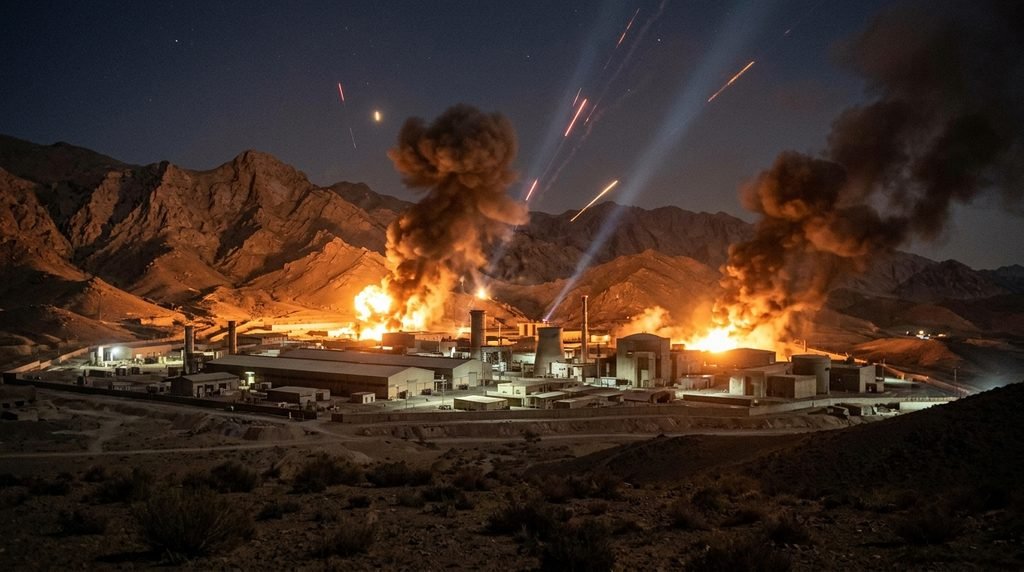
The current situation remains complex. On November 2, President Trump indicated that progress had been made toward an agreement. Iran also suggested that its seven-point plan—which includes reopening the Strait of Hormuz and returning to nuclear negotiations—could be implemented within two days, rather than the previously estimated one week. Qatar and Pakistan are facilitating communication between the two sides. Subsequently, reports emerged of fresh U.S. strikes during the American midterm elections, leading Iran to dismiss the possibility of reaching an agreement in the near term. Furthermore, various reports indicate that Israeli Prime Minister Benjamin Netanyahu has been pressuring President Trump to launch further attacks following the midterm elections. Therefore, the realistic answer is that while there is a possibility of more conventional attacks, there is also an opportunity to reach a settlement. However, the use of nuclear weapons is an entirely different matter, and I have no information to suggest that anything of the sort is about to happen.
Would Russia bomb Ukraine in response?
The question assumes that Russia would start something new, but the bombing never stopped. In the past few days alone, Russia hit Ukrainian energy sites with a large mix of drones and missiles overnight on November 2 and 3, and again on the night of November 3 to 4, leaving many places without power. A strike on November 2 near Zaporizhzhia killed at least 31 civilians, according to Ukrainian military intelligence. On November 5, Ukraine’s air force said Russia launched two missiles and 128 drones in a single night, and Ukraine in turn keeps hitting Russian oil and industrial sites.
How does Iran fit in? Russia condemned the US and Israeli attacks as unprovoked aggression, and Iran has supplied Russia with drone technology, a link Ukraine’s president has pointed to more than once. But Moscow has also been careful, partly because its relations with Washington have warmed. Analysts did expect Russia to weigh its response carefully. There is no sign that it treats Ukraine as a place to answer America. Reports from March suggested the opposite that Russia stepped up its attacks while Washington’s attention was on Iran. In other words, Ukraine is suffering because of Russia’s own war aims, and the world being distracted only makes it worse.
Why Japan is talking about stockpiles
Japan’s reason is the least mysterious of the four. On October 27, Disaster Management Minister Goshi Hosono said the government would issue an urgent request on November 2, the day the country’s new National Disaster Management Agency opens. Japan has advised its citizens and their families to prepare by stocking up on food and water. It is recommended that people keep supplies for least three days though a full week is ideal. Each person should have least three liters of water. Food items, like rice and canned goods are important to have on hand. Portable toilets are also suggested. There is instruction a emergency bag should be ready with batteries, flashlight, power bank for mobile charge, essential medicines and cash. It will be helpful in a crisis moment.
The timing, right after Britain’s campaign, has made some online posts link it to war fears. The coverage I found frames it around earthquakes, with the Nankai Trough quake risk and even a Mount Fuji eruption mentioned among the worries. Japan also has a food angle of its own. After a rice shortage that began in 2024, the government released 590,000 tons from its emergency rice reserve in 2025 and has since been buying rice back, since the stockpile fell to roughly 320,000 tons against a target of about one million. That is a supply-chain story about prices, separate from the household advice.
So, should you stock up on some supplies?
There is no harm in setting aside some extra provisions provided you do so without panicking. Hoarding goods to the point of creating a shortage makes no sense. Stockpiling goods is senseless and only leads to shortages. Officials recommend keeping a larger supply of basic food on hand as a good idea, so essentials are available in case of an emergency and can be accessed quickly if necessary. These preparations can be useful if there are challenges, whether they are natural disasters, man-made crises, wars, floods or even cyber attacks.
Viewing this as a sensible precaution—rather than a cause, for alarm—is perfectly reasonable. While some media outlets may present the situation in a way to drive clicks the reality is that the world has always faced disasters, wars and crises. Governments today simply want to ensure that their citizens are not left in distress during difficult times—encouraging them to be prepared, rather than panicked.
Sources
European Commission preparedness strategy coverage: AP via Inquirer (https://plus.inquirer.net/?p=255763) ,
CNN via KTVZ (https://ktvz.com/news/national-world/cnn-world/2025/03/26/eu-urges-citizens-to-stockpile-72-hours-worth-of-supplies-amid-war-risk/),
Polskie Radio (https://www.polskieradio.pl/395/7785/Artykul/3502391,eu-urges-households-to-prepare-72hour-survival-kits-for-emergencies)
UK, France and Germany campaigns: Greek Reporter, October 30, 2026 (https://greekreporter.com/2026/10/30/household-emergency-supplies-guidance/)
Iran war background and ceasefire: Britannica (https://www.britannica.com/event/2026-Iran-war), Gulf News (https://gulfnews.com/world/mena/us-iran-war-what-we-know-so-far-about-the-ceasefire-deal-1.500499750)
Latest on talks: Al Jazeera, November 2, 2026 (https://www.aljazeera.com/news/2026/11/2/iran-pushing-accelerated-plan-for-ceasefire-talks-with-us),
CBS News live updates (https://www.cbsnews.com/live-updates/iran-war-us-trump-negotiations-midterms/)
Russia and Ukraine: ISW assessments of November 3 and 4, 2026 (https://www.criticalthreats.org/analysis/russian-offensive-campaign-assessment-november-3-2026),
Anadolu via Bytes Europe (https://www.byteseu.com/2499354/),
Daily Ittefaq on Russia’s reaction (https://en.ittefaq.com.bd/15557/russia-slams-us-israel-strikes-on-iran)
Japan: Seoul Economic Daily (https://en.sedaily.com/international/2026/10/27/japan-to-urge-citizens-to-stockpile-three-days-of-food-water) ,
NewsBytes (https://www.newsbytesapp.com/news/world/japan-urges-household-stockpiles-before-national-disaster-management-agency-launch/tldr),
Qatar Tribune on rice buyback (https://www.qatar-tribune.com/article/254733/business/japan-starts-first-rice-buyback-to-replenish-reserves)