Nakshikantha: The Story Stitched Into Bengal’s Quilts
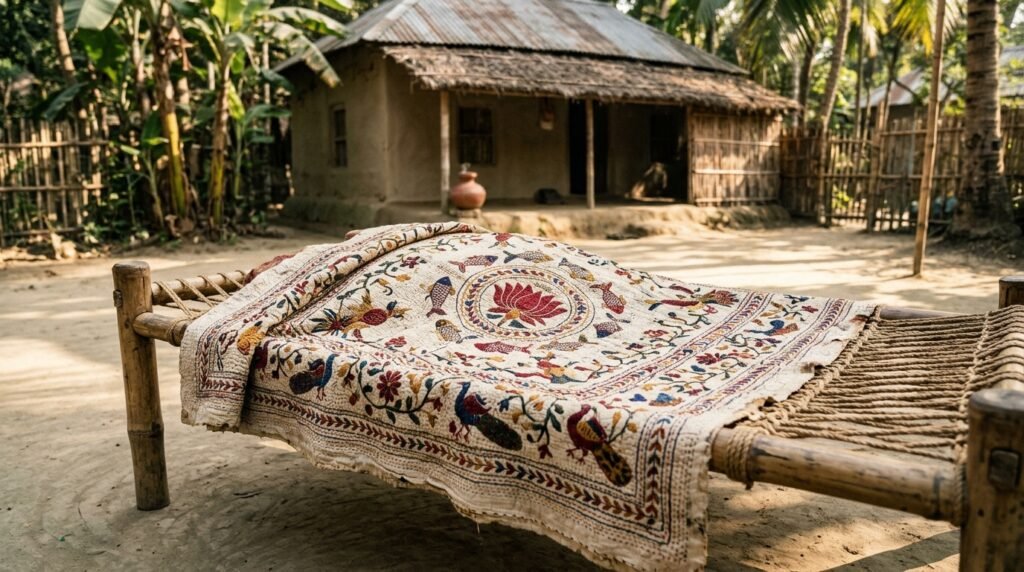
Nakshikantha,The Story Stitched Into Bengal’s Quilts
In the rural regions of Bangladesh, a type of hand-stitched, decorative quilt is known as ‘Nakshikantha’. The name likely stems from the intricate designs—or ‘naksha’—stitched into the fabric. These quilts become particularly sought after during the winter season. Originally, rural women created these quilts by stitching together old pieces of fabric, a practical way to repurpose worn-out garments and avoid waste. Over time, they began incorporating various patterns and designs, transforming the surface of the quilts into a canvas for storytelling. Today, for commercial production, new fabric is used instead of old, repurposed cloth. The Jamalpur district of Bangladesh has become especially renowned for its Nakshikantha. Many women across various regions of Bangladesh earn their livelihood by crafting these quilts. Currently, the Nakshikantha stands as a symbol of Bangladesh’s heritage and pride.
Where the Craft Began
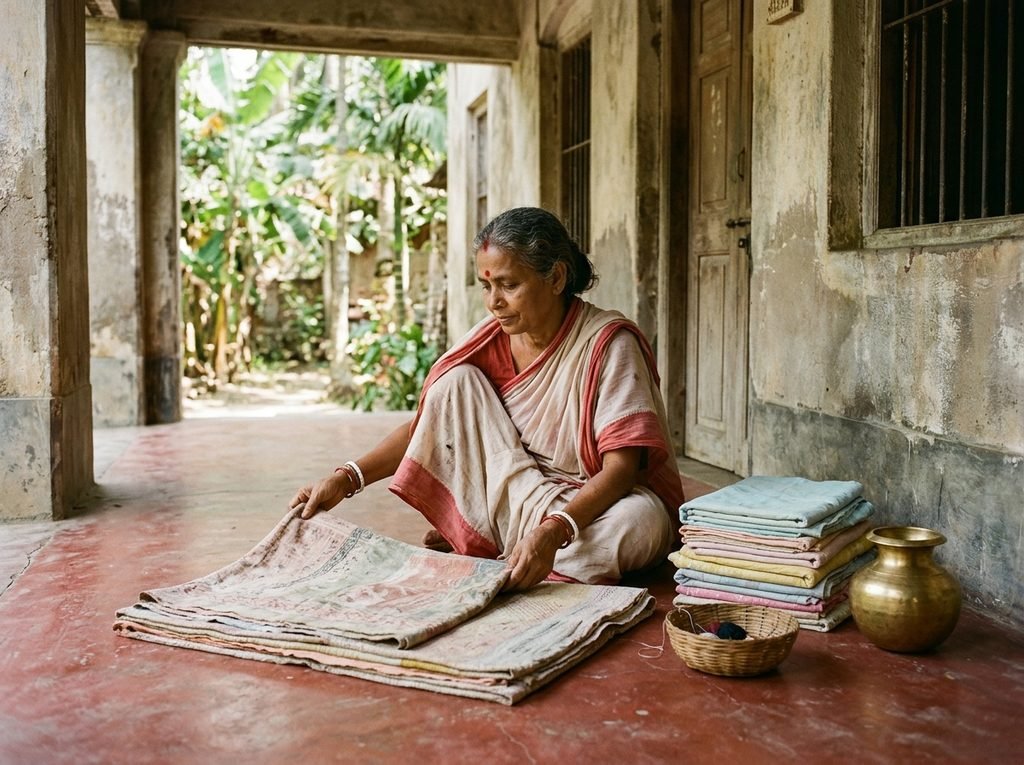
Nobody can say exactly when the first Nakshikantha was sewn, but the habit is very old. In Bengali homes, nothing was thrown away lightly. A sari that had faded or torn still had years of use left in it. Women stacked several soft layers, laid them flat, and held them together with fine thread, often pulled from the colorful borders of the same saris.
The word itself helps explain the craft. “Kantha” refers to the quilt, and “nakshi” means patterned or artistic. So a Nakshikantha is, quite literally, a quilt with a design. The plain version kept a family warm, and the decorated version told a story.
How a Nakshikantha Is Made
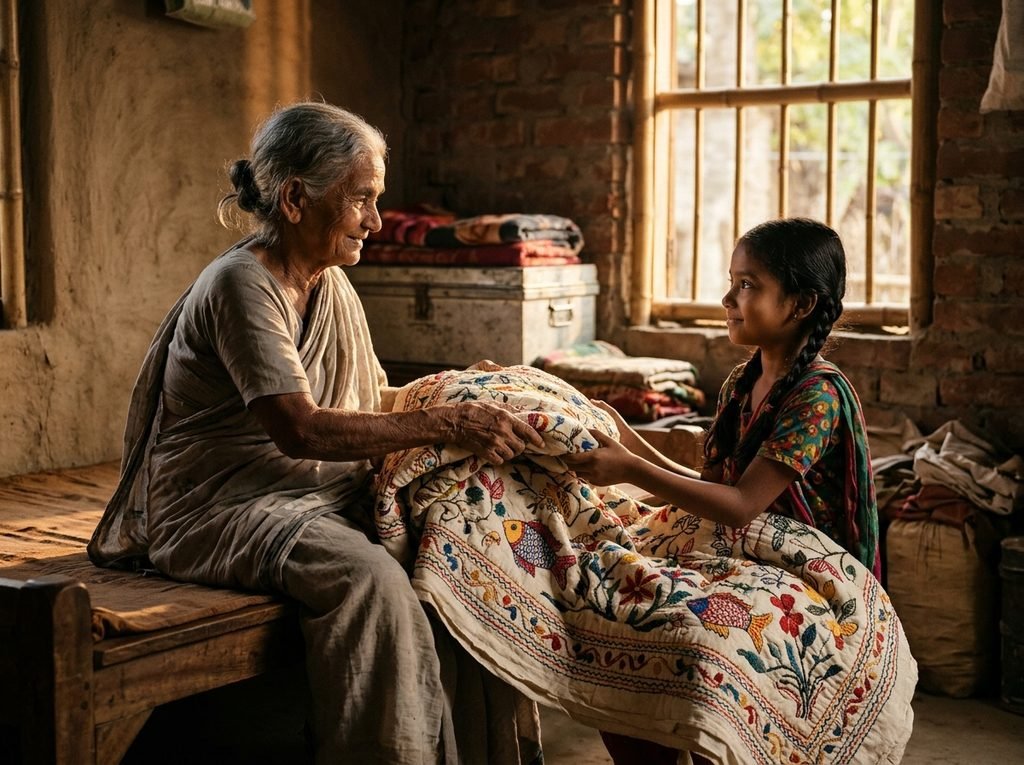
The method is humble, and that is part of its charm. There are no machines and no complicated tools, just a needle, thread, and a lot of time. The layers of cloth are spread out, and the maker stitches across them in tiny, even lines. Those lines do two jobs at once, holding the fabric together and drawing the picture.
Most quilts begin with an outline stitched first, usually a border and a central motif. Then the rest of the surface slowly fills in. A single large quilt can take months, sometimes close to a year, because the women work in between cooking, farming, and looking after children. The slightly wavy ripple you see across the cloth comes from the stitches gently gathering the fabric, and it is one of the easiest ways to tell a handmade piece from a factory copy.
The Pictures and What They Mean
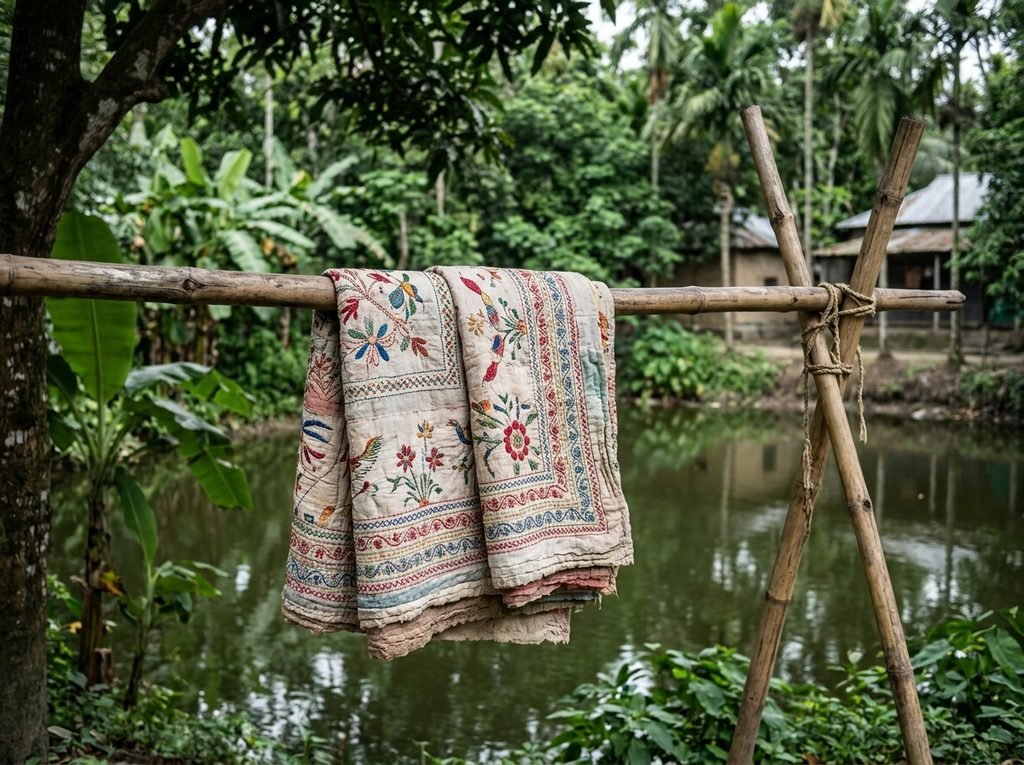
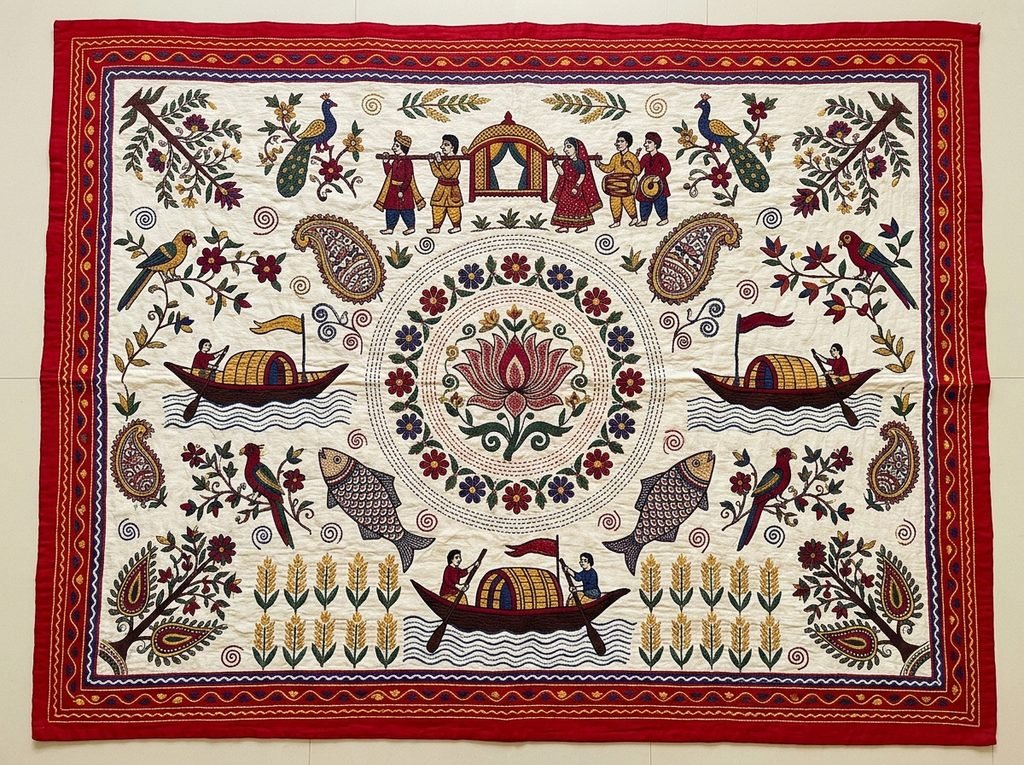
The designs come straight from the world around the women who make them. Lotus flowers, rivers, fish, boats, paddy fields, birds, trees, and wedding processions all appear. Some quilts show the sun and moon, and others show a whole village laid out stitch by stitch.
Many motifs also carry quiet meanings. Fish often stand for plenty and good fortune, while the lotus points to purity. A quilt could be made as a gift for a newborn, a wedding present, or a keepsake for a family member leaving home. Because of this, a Nakshikantha was never just a blanket. It was a way of saying “I thought about you for a very long time.”
The craft even inspired one of the best-loved poems in Bengali literature, Jasimuddin’s Nakshi Kanthar Math, which tells a sad love story around the idea of an embroidered quilt. That poem helped carry the name far beyond the villages.
From Village Homes to the World
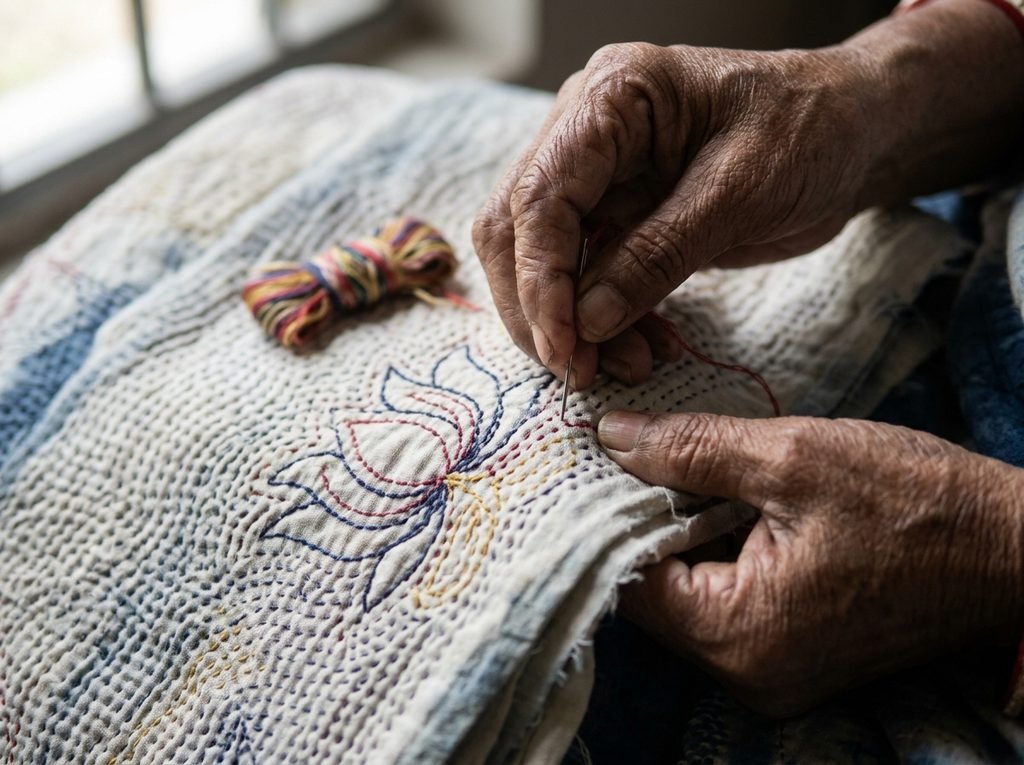
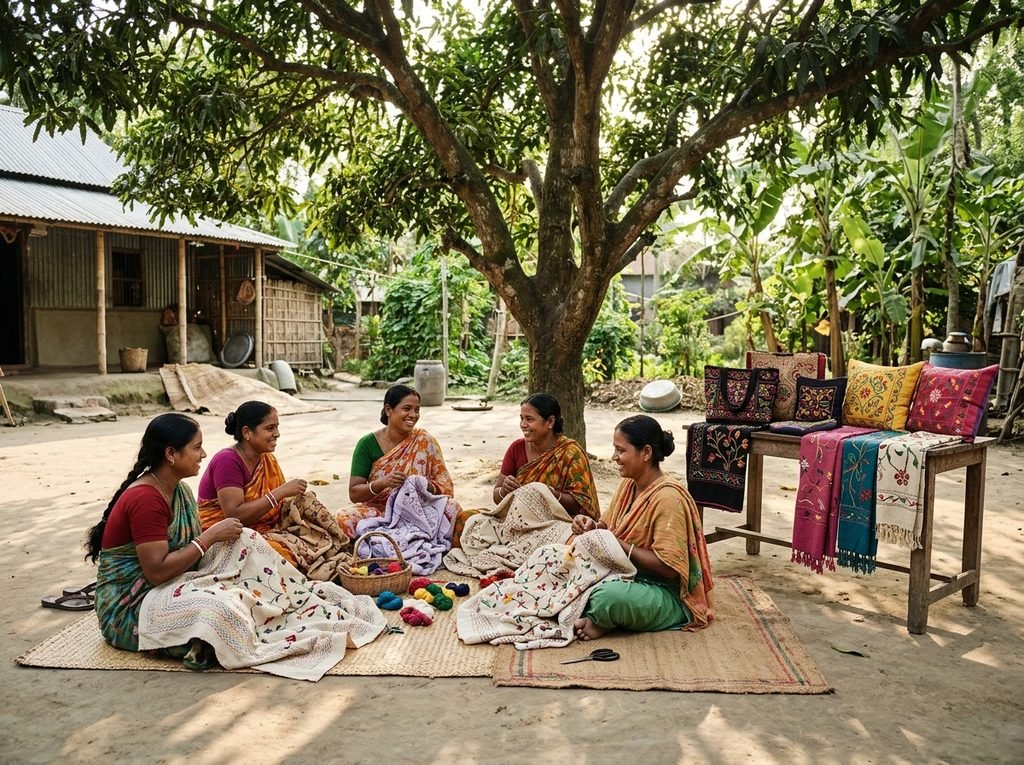
For a long time, Nakshikantha stayed inside the home. Things began to change when organizations and designers noticed how skilled the work was. Women who once stitched only for their families started making quilts, bags, cushion covers, scarves, and wall hangings to sell. In districts such as Jessore, Rajshahi, Faridpur, and Mymensingh, this work now brings real income, and for many women it is the first money they have ever earned themselves.
That matters a great deal. It gives them a voice in the household and a reason to pass the skill to their daughters instead of letting it fade.
Keeping a Nakshikantha Beautiful
If you own one, a little care goes a long way. Wash it gently by hand in cool water with mild soap, and avoid twisting or wringing it. Dry it in the shade, since strong sun can fade the thread. Fold it loosely, and air it out now and then so the fabric can breathe.
Why It Still Matters
In a world full of fast, identical things, a Nakshikantha is slow and personal. It reminds us that beauty can grow from very little, a pile of old cloth and a patient pair of hands. Each stitch is small, but together they hold memory, skill, and pride.
So the next time you see one, look closely. You are not just looking at a quilt. You are reading a story, one stitch at a time.