Taiwan’s Alaska LNG deal: what is confirmed and what it means
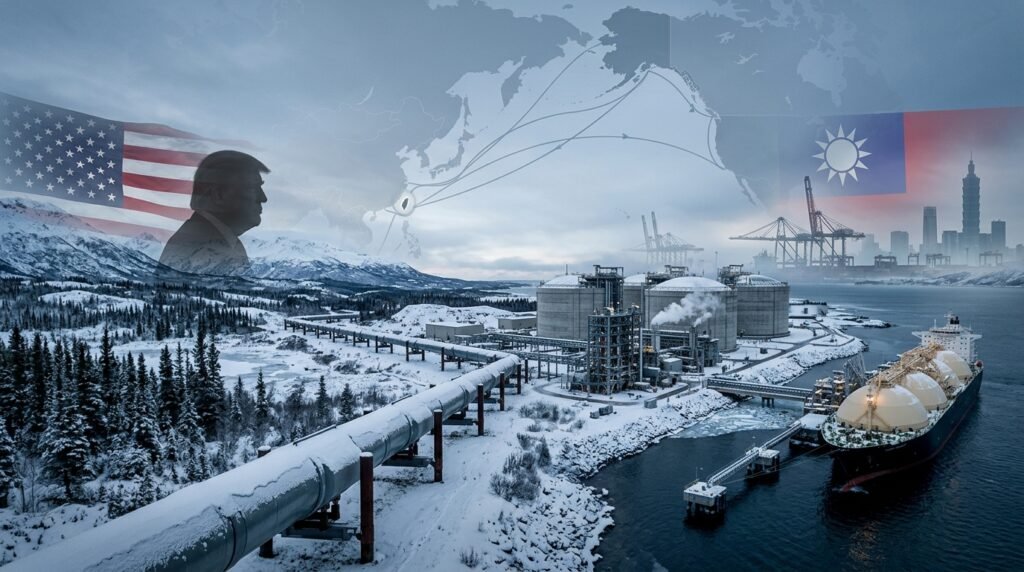
Alaska LNG has been talked about for years without getting built. This week it got its support yet. At a rally in Wasilla Trump said Taiwan had agreed to buy 30% of the gas coming off the pipeline for the 20 years. Taipei confirmed part of that the day. The difference between the two statements is where the discussion begins.
What was announced?
Commerce Secretary Howard Lutnick, who was with Trump at the rally said Taiwan would also invest $4.4 billion in the project. Taiwan’s Ministry of Economic Affairs then said it would invest up to that amount and that the cooperation would include purchases of six million metric tons of Alaska LNG once production starts.
The numbers match roughly. Alaska LNG is designed to export 20 million tons a year so Trump’s 30% figure broadly matches the six million tons Taiwan’s CPC Corp. Had discussed earlier. The ministry also described this as progress in talks. Trump’s comments did not make clear whether a final deal had been signed.
In a follow-up post Trump called the pipeline a “US Federal Government Project”. Put the value of Taiwan’s 20-year commitment at $70 billion to $80 billion. That figure came from Trump and no company or ministry has published it.
Why Taiwan wants this gas
Taiwan imports all of its energy so the case for diversifying LNG supply is easy to make. Recent events made it more urgent. Australia has replaced Qatar as Taiwan’s LNG supplier, with 34.8% of imports in the first eight months of 2026. One report links the decline to the Hormuz crisis, which has reduced Qatari supplies.
Alaska offers a route. Once the project is running tankers would reach Asia in a short seven to nine days across the Pacific. The gas would also reach markets without passing through the Panama Canal or going around the Horn of Africa which cuts transit time and cost. For a buyer worried about shipping lanes in the Middle East a supply line that never touches them has appeal.
Taiwan’s president described the agreement as a way to secure the island’s energy supply. Taipei also has a motive. The announcement comes as Taiwan tries to win Washington’s favor amid tensions with China. One commentator adds that Taiwan is also trying to avoid the tariffs Trump has threatened on Taiwanese semiconductors. Energy security and trade diplomacy are tangled together here. The public statements do not separate them.
The cost problem
Alaska LNG is expensive. Reuters puts the project at $44.5 billion to $54.5 billion for 20 million tons a year. That is more per unit of capacity than recent Gulf Coast LNG plants. Higher capital costs usually mean gas prices for buyers or lower returns for investors or both.
Observers in Taipei have noticed. They are irritated that American LNG costs more and that Taiwan is being asked to invest billions to get the Alaskan gas flowing. There is a counterargument. One analyst says equity ownership gives Taiwan control over supply and leverage in price negotiations. A shareholder can influence terms in ways a spot buyer cannot though only if the project gets built and the terms hold.
Domestic politics in Taiwan
The deal also lands in a debate at home. The ruling Democratic Progressive Party is phasing out power with the help of more LNG imports and the opposition Kuomintang strongly opposes that policy. Expensive Alaskan gas gives the opposition a cost to point at. Expect the price and the $4.4 billion equity stake to come up in energy debates over the coming months.
The project still has to be financed
A 20-year purchase commitment sounds firm. The paperwork that matters for financing is binding contracts. Far Alaska LNG has agreements covering 13 million tons a year from Asian buyers and TotalEnergies. It needs agreements for another 3 million tons. It must turn them all into binding deals to secure financing. The developers aim to take an investment decision on the pipeline in 2026 followed by the export facility in 2027 with first exports targeted for 2031.
The South Korea episode shows why caution is warranted. Trump said month that South Korea had agreed to invest in the $54 billion project but Seoul said the decision was not final. Korean officials said they needed to assess the project’s commercial viability first. Taiwan’s statement is more specific than Seoul’s was, with a named company, a volume and an investment ceiling. It is still described as progress in talks.
Timing is a risk. One analysis argues that geographic challenges could erode the project’s competitiveness since LNG supply is expected to grow through the 2020s and early 2030s. If Alaska’s first cargoes arrive in 2031 into a supplied market a long-term contract at a premium price could look expensive.
What to watch next
Four developments will show whether this is a turning point or another announcement:
1. Whether Taiwan’s CPC Corp. Signs a binding sales agreement, not a letter of intent.
2. Whether the remaining 3 million tons are contracted.
3. Whether South Korea or Japan commits money.
4. Whether the pipeline’s final investment decision arrives before the end of 2026.
The Taiwan announcement raises the odds of the project going ahead. It does not secure the financing on its own.
Frequently asked questions
How much Alaska LNG will Taiwan buy?
Trump said 30% of output, for 20 years. Taiwan’s ministry said CPC would buy six million tons a year once production begins.
How much will Taiwan invest?
Up to $4.4 billion, according to Taiwan’s Ministry of Economic Affairs.
When will Alaska LNG start exporting?
Developers are targeting exports in 2031 assuming financing and construction go to plan.