Nepal floods and landslides: why it happened and who should pay them
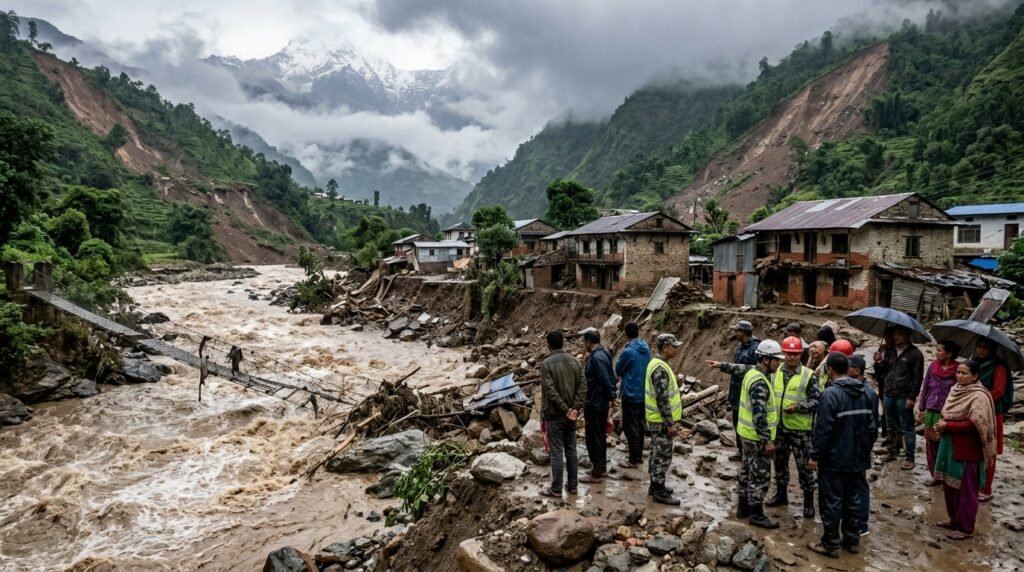
Nepal has experienced devastating floods, followed by landslides. The country’s Prime Minister recently addressed the United Nations, calling for compensation and fair financial assistance to address climate-related losses and damages. While he did not single out any specific nation, he urged countries with high greenhouse gas emissions to step forward and take action to mitigate climate-related harm, reminding them of their responsibilities in this regard. In this piece, we examine why these events occurred in Nepal, what the country has requested from the United Nations, the extent of the damage it has faced, and how the burden of responsibility for climate change should be distributed.
What caused the floods and the other natural disasters in Nepal?
The flooding in Nepal is a direct result of the monsoon rains. The rains have been so heavy that the natural dams that used to hold back the water in the upper reaches have simply given way. The rivers have risen and the water from upstream has simply washed down. Climate change is the key driver of this; it’s causing the glaciers in the upper regions to melt and it’s also increasing the frequency of extreme weather events. The melting of the glaciers is a major factor in the situation as it’s causing the high altitude lakes to fill with water. When the natural containment of those lakes is breached the water rushes down very quickly and that’s when you get the disaster. Nepal’s topography is such that it’s a series of steep slopes and narrow river valleys so the water comes down very rapidly and you have massive destruction before you even have a chance to react.
What Prime Minister Balendra Shah said at the UN
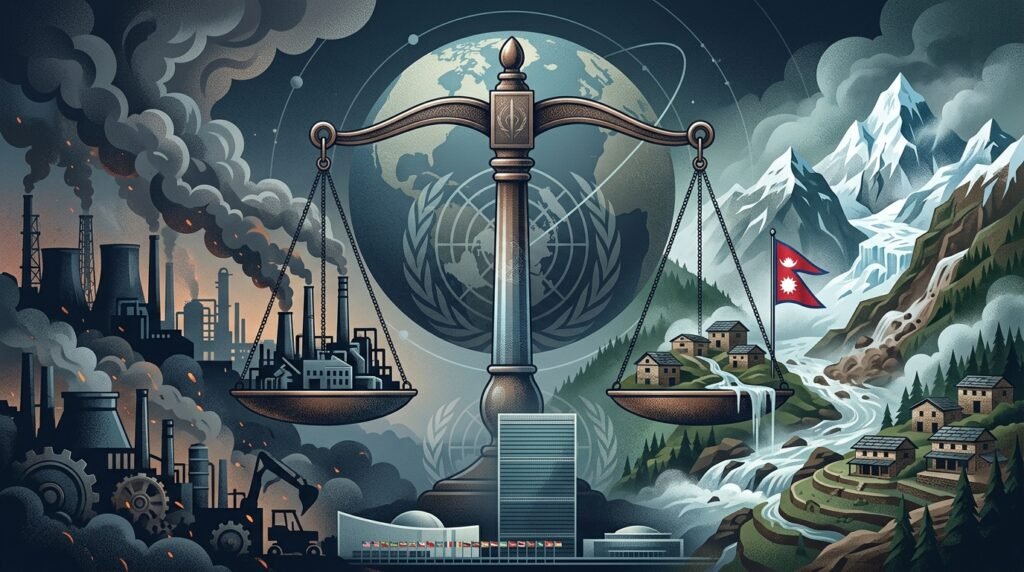
PM Balendra Shah spoke at the 81st session of the UN General Assembly on 24 Sept 2026. Nepal contributes less than 0.1% of global GHG emissions yet is experiencing massive losses due to climate change. His main point was that the developed countries, and those that have emitted the most carbon over the years, should bear a greater proportion of the financial burden of climate change damage. He made it very clear that Nepal was not aiming to pick on any one country in particular.
What Nepal is asking for
The most tangible request is for money. Nepal has submitted an application to the UN’s Fund for Response to Loss and Damage (FRLD) for $20m and Foreign Minister Shishir Khanal confirmed that in September. The PM has also made it clear that countries which are poor and have been devastated by climate change should not be asked to take on additional debt to rebuild, and has therefore called for sufficient, readily available grant-based support.
How big is the damage?
The first estimate of economic losses is $2.7 billion. The prime minister said that recovery and reconstruction will need 10 percent of GDP. These numbers can change depending on how and when lossesre counted. $20 million is easy to think of as the cost of the disaster. It is only the amount that Nepal asked the loss and damage fund. The minister’s speech on 24 September did not give a specific compensation figure. It asked for grants and fair climate finance.
Who is responsible for damage to the climate and environment?
Human activity is the cause of damage to the climate and environment. Responsibility is uneven across countries, companies and individuals. The United States, many European countries and other large economies built their industry and power systems on fuels for a long time, which released huge amounts of carbon dioxide into the atmosphere. Extracting moving and burning coal, oil and gas releases greenhouse gases and the power plants, factories and transport systems that rely on these fuels are sources. Land use also adds to the damage. Cutting forests logging, filling wetlands and unplanned urban growth destroy biodiversity and weaken nature’s ability to absorb carbon. Untreated industrial waste, plastic pollution, chemicals and excess use of resources degrade rivers, soil, oceans and air. Poor enforcement of law ignored pollution control and wasteful production and consumption make everything worse.
Which countries carry the historical responsibility?
Since the Industrial Revolution, the United States and many European countries have emitted the carbon dioxide. China now emits the carbon dioxide each year from fossil fuels and India another large economy also emits a significant amount.
Responsibility can be measured in three ways. Historical responsibility is the amount that has been emitted in the past. Current responsibility is the amount being emitted each year now. Per capita responsibility is the emissions of one person. Countries rank differently on each measure so current emissions alone do not decide who bears responsibility.
How much responsibility do poor countries bear?
Many developing countries, such as Bangladesh and Nepal have low historical and per capita emissions. They still face harm from sea level rise, cyclones, floods, droughts and landslides. That is why climate justice and the polluter pays principle are important in UN climate talks. In practice both ideas mean that those who polluted more have a duty to cut emissions and to support the countries that are hurt.
Nebal’s argument in
Nebal’s climate justice case says that countries that historically emitted the most carbon and shaped climate change should give compensation, grants, technology and disaster‑prevention support to low‑emitting but heavily affected countries, like Nepal. No single person or country created the climate crisis. Large fossil‑fuel economies, polluting companies, deforestation and weak environmental policy built it together so solutions must weigh each party’s responsibility and its capacity to act.